If you love simple, old-fashioned comfort food, this Slow Cooker Amish Cabbage and Potatoes recipe is one to keep in your recipe box.
Tender potatoes, sweet cabbage, and savory onions slowly cook together until everything is soft, flavorful, and comforting. It is an inexpensive side dish that requires very little hands-on preparation, making it perfect for busy weeknights, Sunday dinners, family gatherings, and cozy fall meals.
The slow cooker does most of the work while the cabbage and potatoes absorb the savory flavors of the cooking liquid. The result is a hearty dish that tastes like the kind of homemade food you would expect to find at a family-style dinner table.
Why You’ll Love This Slow Cooker Cabbage and Potatoes
Simple and Budget-Friendly
Cabbage and potatoes are inexpensive ingredients that can easily turn into a satisfying side dish.
Easy Slow Cooker Recipe
After a few minutes of preparation, everything goes into the slow cooker and cooks until tender.
Cozy Comfort Food
Soft potatoes, tender cabbage, and sweet onions create a warm and satisfying combination.
Perfect for Family Dinners
This recipe pairs beautifully with roasted meats, sausage, chicken, pork, and beef.
Great for Meal Prep
The leftovers reheat well, making this a practical recipe for preparing meals ahead of time.
Ingredients
- 2 ½ pounds Yukon Gold potatoes, cut into bite-sized pieces
- 1 medium head green cabbage, chopped into large pieces
- 1 large yellow onion, sliced
- 2 cups low-sodium vegetable or chicken broth
- 4 tablespoons unsalted butter
Optional salt and black pepper can be added to taste.
Why Yukon Gold Potatoes?
Yukon Gold potatoes are an excellent choice because they have a naturally buttery texture and hold their shape well during slow cooking.
Russet potatoes can also be used, although they tend to become softer and more crumbly.
How to Make Slow Cooker Amish Cabbage and Potatoes
Step 1: Prepare the Vegetables
Wash the potatoes thoroughly and cut them into fairly even bite-sized pieces.
There is no need to peel Yukon Gold potatoes. The thin skins soften nicely during cooking.
Remove the tough outer leaves from the cabbage and cut the head into wedges.
Then chop the cabbage into large pieces.
Slice the onion into thin or medium slices.
Step 2: Layer the Potatoes
Place the potatoes in the bottom of the slow cooker.
Spread them into an even layer.
Potatoes take slightly longer to become tender than cabbage, so placing them underneath helps them cook directly in the broth.
Step 3: Add the Cabbage and Onion
Add the chopped cabbage over the potatoes.
Scatter the sliced onion evenly over the top.
Do not worry if the cabbage seems to fill the slow cooker. Cabbage cooks down considerably as it softens.
Step 4: Add the Broth
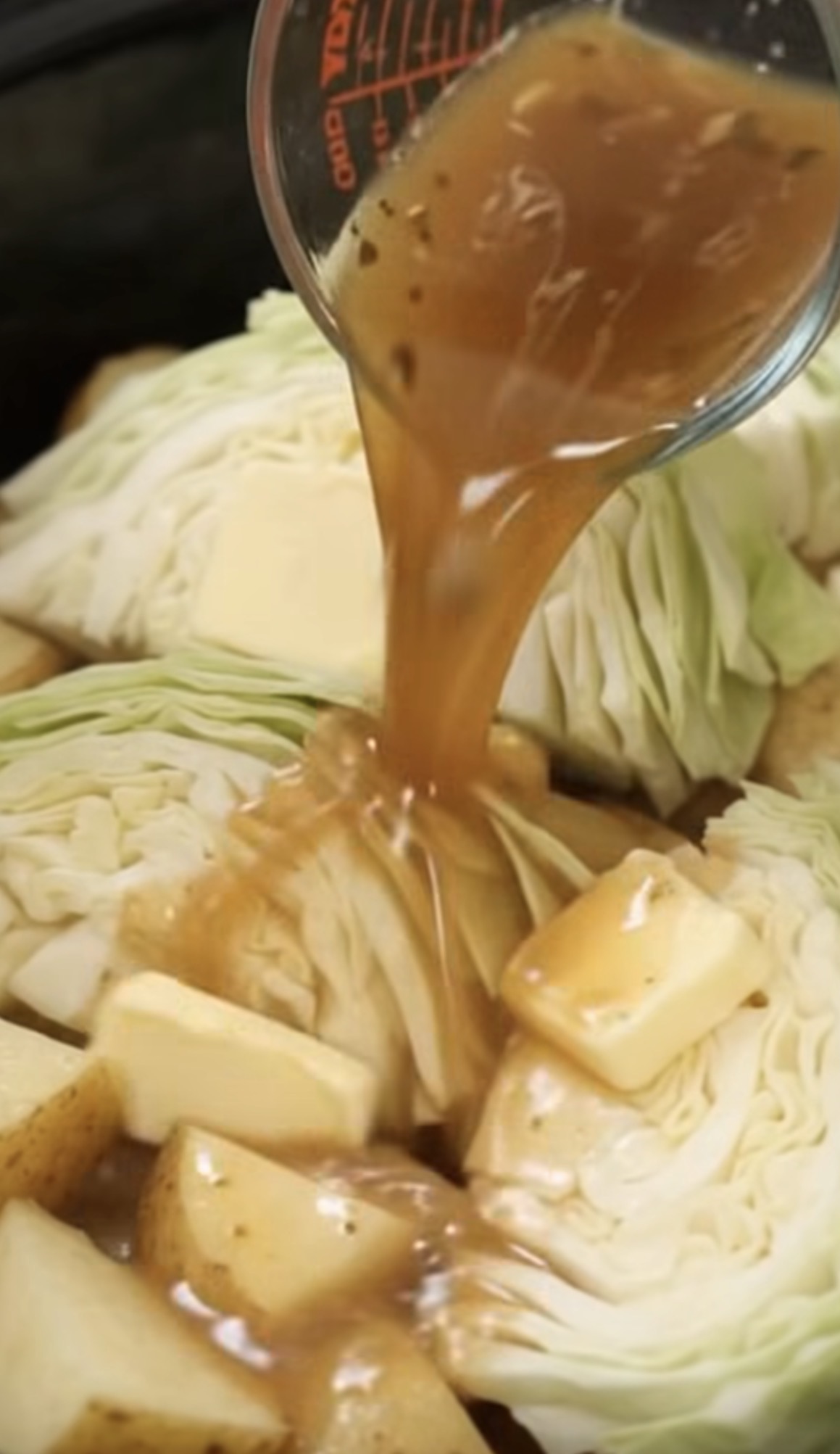
Pour the broth evenly over the vegetables.
The broth provides moisture and helps create the savory flavor throughout the dish.
You do not need to completely submerge the vegetables.
Step 5: Add the Butter
Cut the butter into several smaller pieces and distribute them over the top.
As the butter melts, it works its way through the cabbage and potatoes.
Step 6: Season
Add salt and black pepper according to your preference.
Remember that the broth can already contain salt, so taste the finished dish before adding additional seasoning.
Step 7: Slow Cook
Cover and cook on:
LOW for 6–7 hours
or
HIGH for 3–4 hours
The vegetables are ready when the potatoes are fork-tender and the cabbage is soft.
Cooking time can vary depending on the size of the vegetables and the individual slow cooker.
Step 8: Stir and Serve
Once everything is tender, gently stir the cabbage and potatoes.
Taste and adjust the seasoning if needed.
Serve warm with a little of the buttery cooking liquid spooned over the top.
Tips for Perfect Cabbage and Potatoes
Cut the Potatoes Evenly
Try to keep the potato pieces close to the same size.
This helps them cook at approximately the same rate.
Don’t Chop the Cabbage Too Small
Larger pieces hold their texture better during several hours of slow cooking.
Very small pieces can become overly soft.
Don’t Add Too Much Liquid
Cabbage releases quite a bit of moisture as it cooks.
You only need enough broth to create a moist cooking environment. Adding too much can make the finished dish watery.
Check the Potatoes First
The potatoes determine when the dish is ready.
Insert a fork into one of the larger pieces. It should slide in easily.
Stir Gently
Once cooked, the potatoes can be quite tender. Stir gently to avoid turning them into mashed potatoes.
What Does “Amish-Style” Mean?
The term “Amish-style” in this recipe refers to the simple, hearty, old-fashioned comfort-food approach rather than claiming that this exact recipe is a traditional Amish recipe.
The combination of inexpensive vegetables, straightforward preparation, and family-style serving fits naturally into that rustic comfort-food theme.
What to Serve With Cabbage and Potatoes
This slow cooker side dish goes with almost any hearty main course.
Try serving it alongside:
- Roasted chicken
- Pork chops
- Roast pork
- Meatloaf
- Pot roast
- Smoked sausage
- Kielbasa
- Ham
- Roast beef
- Grilled chicken
For a simple meatless meal, serve a generous bowl with crusty bread and a fresh salad.
Easy Variations
Add Smoked Sausage
Sliced kielbasa or smoked sausage can turn this side dish into a complete meal.
Simply add the sausage during cooking and make sure it is heated thoroughly before serving.
Add Carrots
Chopped carrots add natural sweetness and extra color.
Add them with the potatoes so they have enough time to become tender.
Add Bacon
Cooked crumbled bacon adds smoky, savory flavor.
For the best texture, stir some into the finished dish just before serving.
Add Garlic
A few cloves of minced garlic can add extra savory flavor.
Add Fresh Herbs
Parsley, thyme, or dill can brighten the finished dish.
Fresh herbs are especially good added just before serving.
Make It Vegetarian
Use vegetable broth instead of chicken broth and make sure all other ingredients are vegetarian-friendly.
How to Make It a Complete One-Pot Meal
If you want to turn this cabbage and potato dish into a more substantial dinner, add a protein.
Smoked kielbasa is one of the easiest options.
You can also use:
- Cooked ham
- Smoked sausage
- Polish sausage
- Leftover roast pork
- Shredded cooked chicken
The potatoes and cabbage create the hearty base while the meat adds extra flavor and protein.
Can I Use Red Cabbage?
Yes, but green cabbage is the traditional choice for the appearance and flavor of this particular recipe.
Red cabbage will give the dish a different color and a slightly different flavor.
If using red cabbage, expect the cooking juices to take on some purple color.
Can I Use Russet Potatoes?
Absolutely.
Russet potatoes will work, but they tend to become softer than Yukon Gold potatoes.
If you want potatoes that remain creamy while still holding their shape, Yukon Gold potatoes are a great choice.
Storage
Allow leftovers to cool before transferring them to an airtight container.
Refrigerate for 3–4 days.
Keep some of the cooking liquid with the vegetables to help prevent them from drying out.
How to Reheat
For larger portions, reheat the cabbage and potatoes gently in a covered saucepan over medium-low heat.
Add a small splash of broth if needed.
For individual portions, the microwave works well.
Heat in short intervals and stir gently between each interval.
Can You Freeze Cabbage and Potatoes?
You can freeze the dish, but the texture of both cabbage and potatoes may become softer after thawing.
For the best texture, enjoy it fresh or refrigerated.
If you do freeze it, allow it to cool completely before placing it in a freezer-safe container.
Thaw overnight in the refrigerator and reheat gently.
Frequently Asked Questions
Can I make this recipe without butter?
Yes. You can replace the butter with olive oil or another cooking fat, although butter gives the dish its classic rich flavor.
Why is my cabbage watery?
Cabbage naturally releases water as it cooks. Adding too much broth can make the finished dish even thinner, so use only the amount called for.
Can I add sausage?
Yes. Smoked sausage or kielbasa is an excellent addition and can turn the dish into a hearty main course.
Do I need to peel the potatoes?
No. Yukon Gold potatoes have thin skins, so peeling is optional.
Can I make this on HIGH?
Yes. Cook on HIGH for approximately 3–4 hours, checking the potatoes toward the end.
How do I know when it is done?
The potatoes should be fork-tender, and the cabbage should be soft but not completely disintegrated.
Can I make it ahead?
Yes. Prepare and cook the dish, refrigerate it, and gently reheat it before serving.
Recipe Card
Slow Cooker Amish Cabbage and Potatoes
Prep Time: 15 minutes
Cook Time: 6–7 hours
Total Time: About 6 hours 15 minutes
Servings: 6–8
Category: Side Dish
Method: Slow Cooker
Cuisine: American Comfort Food
Ingredients
- 2 ½ pounds Yukon Gold potatoes, cut into bite-sized pieces
- 1 medium head green cabbage, chopped
- 1 large yellow onion, sliced
- 2 cups low-sodium vegetable or chicken broth
- 4 tablespoons unsalted butter
- Optional salt and black pepper, to taste
Directions
- Wash and cut the potatoes into even bite-sized pieces.
- Chop the cabbage into large pieces and slice the onion.
- Place the potatoes in the bottom of the slow cooker.
- Add the cabbage and sliced onion.
- Pour the broth evenly over the vegetables.
- Add the butter in small pieces over the top.
- Season with salt and black pepper if desired.
- Cover and cook on LOW for 6–7 hours or HIGH for 3–4 hours.
- Cook until the potatoes are fork-tender and the cabbage is soft.
- Gently stir and serve warm.
Final Thoughts
This Slow Cooker Amish Cabbage and Potatoes recipe proves that simple ingredients can create incredibly satisfying comfort food.
Tender potatoes, sweet cabbage, onions, buttery richness, and savory broth come together in one easy slow cooker dish. It is inexpensive, filling, and versatile enough for everything from a weeknight dinner to a Sunday family meal.
Serve it alongside roast pork, sausage, chicken, or beef, or enjoy it as a simple meatless meal with warm bread. Once you try this easy cabbage and potato recipe, it may become one of those dependable comfort-food dishes you return to again and again.