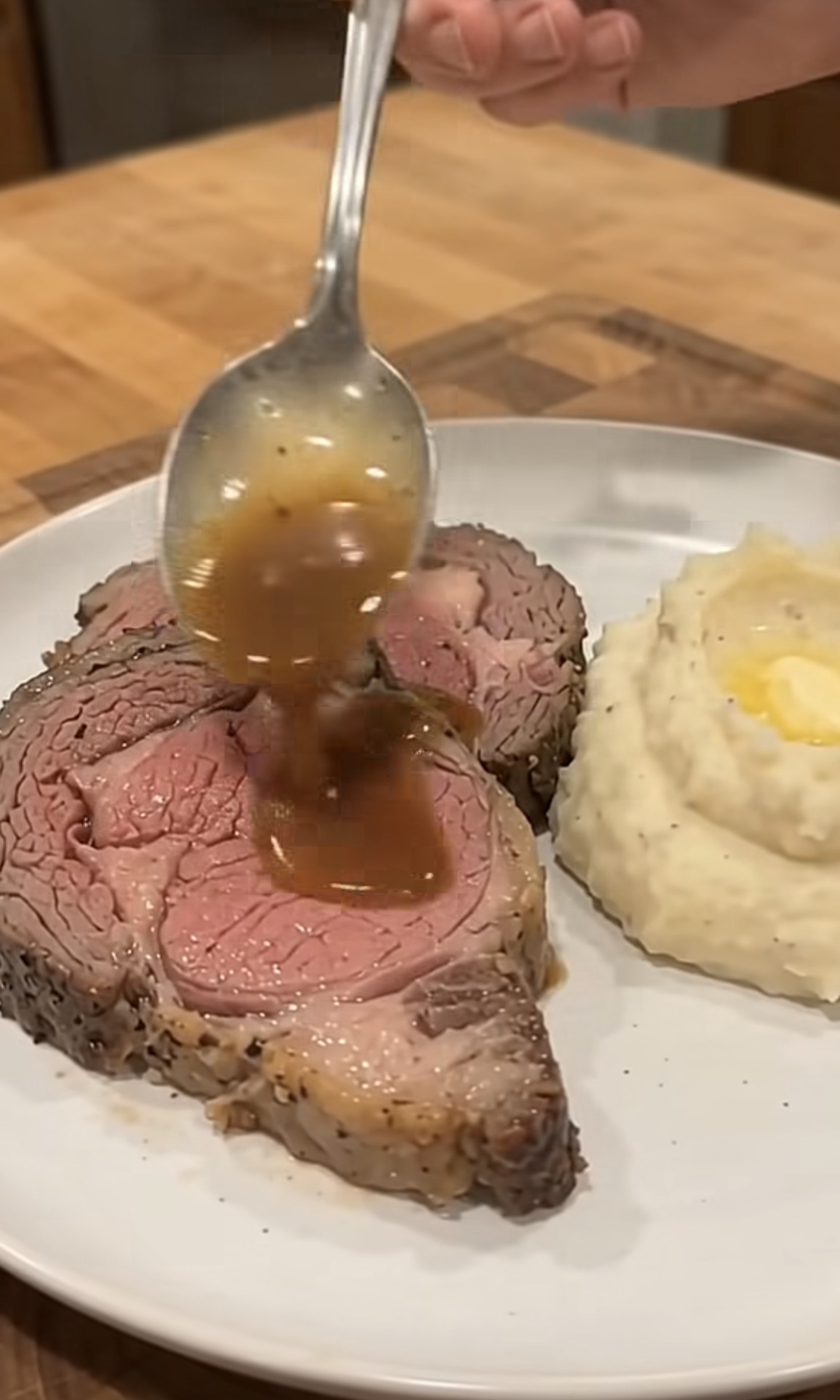
A beautiful prime rib dinner doesn’t have to mean spending the entire day in the kitchen. This 4-Ingredient Crockpot Prime Rib Roast Au Jus is a simple way to prepare a flavorful beef roast with rich, savory cooking juices and very little hands-on work.
The slow cooker provides gentle, steady heat while garlic, beef broth, and onion soup seasoning add delicious flavor. As the roast cooks, its juices mingle with the broth to create a simple au jus-style sauce that is perfect for spooning over sliced beef or serving alongside it.
This recipe is especially lovely for Christmas dinner, holiday gatherings, Sunday suppers, or any occasion when you want a special meal without complicated preparation.
One important detail: prime rib is a premium cut that is naturally tender and is often best enjoyed cooked to a medium-rare or medium temperature. Unlike chuck roast, it should not be cooked until it falls apart. The goal is tender, sliceable beef, not shredded pot roast.
Why You’ll Love This Crockpot Prime Rib Roast
Only four main ingredients: You need prime rib, beef broth, garlic, and dry onion soup mix. A few optional seasonings can be added if desired.
Easy preparation: Season the roast, add the broth, and let the slow cooker do most of the work.
Rich au jus-style sauce: The beef juices combine with the broth and seasonings to create a savory sauce for serving.
Perfect for special occasions: Prime rib makes an impressive centerpiece for Christmas, Thanksgiving, birthdays, and family celebrations.
Minimal hands-on cooking: Once the roast is in the slow cooker, you can focus on preparing side dishes and enjoying time with your guests.
Easy to customize: Adjust the seasoning and serving style to suit your preferred flavor.
Ingredients You’ll Need
This recipe uses four main ingredients. Optional additions are listed separately and are not included in the ingredient count.
1. Prime Rib Roast
Use one boneless prime rib roast weighing approximately 3 to 4 pounds.
Prime rib, also called a standing rib roast when bone-in, is prized for its rich flavor and tender texture. Look for a roast with good marbling because the fat helps keep the meat flavorful.
A boneless roast is generally easier to fit into a standard slow cooker. If using bone-in prime rib, make sure it fits comfortably with the lid fully closed.
For the best results, use a roast of fairly even thickness so it cooks more consistently.
2. Beef Broth
Use 2 cups of beef broth.
Beef broth provides moisture and forms the foundation of the au jus-style sauce. Choose a good-quality broth for a richer flavor.
Low-sodium beef broth is a good choice because the onion soup mix already contains salt.
3. Garlic
Use 4 cloves of fresh garlic, minced.
Garlic adds a warm, savory flavor that complements the natural richness of prime rib.
If you prefer a milder garlic taste, use 2 cloves instead.
4. Dry Onion Soup Mix
Use one 1-ounce packet of dry onion soup mix.
This seasoning blend adds onion flavor, herbs, and savory seasoning to the broth. It also gives the cooking juices a deeper, more developed taste.
Because packaged soup mix can be salty, avoid adding extra salt until you taste the finished au jus.
Optional Seasonings
These additions are optional and are not part of the four main ingredients:
- ½ teaspoon freshly ground black pepper
- ½ teaspoon dried thyme
- 1 teaspoon Worcestershire sauce
- 1 tablespoon olive oil for searing
Equipment Needed
- 5- to 6-quart slow cooker
- Meat thermometer
- Small mixing bowl
- Measuring cup
- Cutting board
- Sharp carving knife
- Tongs
- Small saucepan for reducing the au jus, if desired
A reliable instant-read meat thermometer is especially important for prime rib. Cooking time alone cannot tell you whether the center has reached your preferred doneness.
Step-by-Step Instructions
Step 1: Prepare the Prime Rib
Remove the prime rib roast from its packaging.
Pat the surface dry with paper towels. This helps the seasoning stick and makes it easier to brown the exterior if you choose to sear it.
Trim only any excessively thick, hard fat. Leave a reasonable layer of fat because it contributes flavor during cooking.
For more even cooking, allow the roast to sit out briefly while you prepare the other ingredients, but do not leave raw beef at room temperature for more than 2 hours.
Step 2: Season the Roast
Place the dry onion soup mix in a small bowl.
Add the minced garlic and optional black pepper or thyme.
Rub the seasoning mixture over the entire surface of the roast.
Press gently so the garlic and seasoning adhere to the beef.
Step 3: Optional: Sear for Extra Flavor
Although searing is not required, it can improve the flavor and appearance of the roast.
Heat a tablespoon of olive oil in a large skillet over medium-high heat.
Sear the roast for approximately 2 to 3 minutes per side, turning carefully with tongs.
The goal is to brown the outside, not cook the center.
Transfer the roast to the slow cooker.
Step 4: Add the Beef Broth
Pour the beef broth into the bottom of the slow cooker around the roast.
Avoid pouring all the liquid directly over the seasoned surface because you want as much of the seasoning to remain on the beef as possible.
The roast does not need to be completely submerged. The broth will collect the beef juices and help create the au jus-style sauce.
Step 5: Slow Cook the Prime Rib
Cover the slow cooker with its lid.
Cook on LOW, checking the internal temperature early because prime rib can become overcooked if left too long.
For a 3- to 4-pound boneless roast, cooking may take approximately 3 to 5 hours, depending on its shape, starting temperature, and your slow cooker.
These times are estimates, not guarantees. Begin checking the center well before the end of the expected cooking window.
For a medium-rare result, remove the roast from the heat at approximately 125°F to 130°F, then allow for a resting period and carryover cooking. For medium, a final temperature around 135°F to 145°F is generally preferred.
For food safety, whole beef roasts should reach at least 145°F followed by a 3-minute rest. If you prefer rare or medium-rare beef below that temperature, understand that it does not meet the standard food-safety recommendation, particularly for people at higher risk from foodborne illness.
Step 6: Rest the Roast
Carefully remove the roast from the slow cooker and transfer it to a cutting board.
Tent loosely with foil and rest for approximately 15 to 20 minutes.
Resting helps the juices settle and makes the roast easier to carve.
Avoid cutting the roast immediately because the juices can run out, leaving the slices less moist.
Step 7: Prepare the Au Jus
Carefully strain the cooking liquid into a small saucepan if you prefer a smoother sauce.
Skim excess fat from the surface.
Taste the liquid before adding any extra salt because the onion soup mix may already provide plenty of seasoning.
For a more concentrated flavor, simmer the liquid gently for 5 to 10 minutes.
If you prefer a thicker sauce, mix 1 teaspoon of cornstarch with 1 tablespoon of cold water and whisk it into the simmering liquid. This creates a thicker gravy rather than traditional thin au jus.
Step 8: Slice and Serve
Using a sharp carving knife, slice the prime rib against the grain.
Arrange the slices on a warm serving platter.
Spoon a little au jus over the meat or serve the sauce in a small bowl alongside the roast.
Serve immediately with your favorite holiday side dishes.
Helpful Tips for the Best Crockpot Prime Rib
Use a meat thermometer. Prime rib is an expensive cut, and the thermometer is the best way to avoid overcooking it.
Choose a roast that fits comfortably. The slow cooker lid must close completely for safe, even heating.
Don’t expect shredded beef. Prime rib is meant to remain sliceable. It should not be cooked until it falls apart like chuck roast.
Use LOW rather than prolonged HIGH cooking. Gentle cooking gives you more control over the result.
Consider searing first. Browning creates additional flavor, although it is an optional step.
Use low-sodium broth. This helps prevent the au jus from becoming too salty.
Rest before carving. Allowing the roast to rest helps retain its juices.
Slice against the grain. This makes each serving easier to chew.
Check the temperature in the center. Avoid touching the slow cooker insert or placing the thermometer against a large pocket of fat.
Common Mistakes to Avoid
Cooking Prime Rib Like a Chuck Roast
Prime rib is not designed for the long, fall-apart cooking style used for tougher cuts. Excessive cooking can make this premium roast dry and disappointing.
Relying Only on Cooking Time
Different roasts have different shapes and thicknesses. A thermometer is much more reliable than a fixed cooking time.
Adding Too Much Salt
Onion soup mix is already seasoned. Adding extra salt before tasting the au jus can make the sauce too salty.
Skipping the Resting Period
Cutting immediately after cooking can cause more juices to escape. Rest the roast before carving.
Filling the Slow Cooker Too High
The roast should fit comfortably, with the lid fully closed. Never force the lid down or exceed the appliance’s recommended capacity.
Expecting a Crispy Crust
A slow cooker produces a moist cooking environment, not a dry roasting environment. The outside will not develop the same crust as oven-roasted prime rib. Searing before cooking or briefly browning the exterior afterward can improve its appearance.
What to Serve With Prime Rib Au Jus
Prime rib is a wonderful centerpiece for a special dinner. These sides complement its rich beef flavor.
- Creamy mashed potatoes: A classic choice for soaking up the savory au jus.
- Roasted garlic potatoes: Their crisp edges and soft centers pair beautifully with the beef.
- Green beans: Serve steamed or sautéed green beans for a fresh vegetable side.
- Roasted carrots: Their natural sweetness balances the savory roast.
- Creamed spinach: A rich steakhouse-style side that makes the meal feel extra special.
- Yorkshire pudding: A traditional accompaniment for roast beef.
- Dinner rolls: Perfect for enjoying every drop of the cooking juices.
- Roasted Brussels sprouts: Add a flavorful vegetable option to your holiday table.
For a complete holiday dinner, serve sliced prime rib with mashed potatoes, roasted vegetables, dinner rolls, and a small bowl of warm au jus.
Easy Variations
Garlic Herb Prime Rib
Add 1 teaspoon dried rosemary and 1 teaspoon dried thyme to the seasoning mixture. These herbs complement the beef beautifully.
Worcestershire Prime Rib Au Jus
Add 1 tablespoon Worcestershire sauce to the beef broth before cooking. It adds a deeper savory flavor.
Mushroom Prime Rib Au Jus
Add 8 ounces of sliced mushrooms to the slow cooker around the roast. They absorb the cooking juices and add an earthy flavor.
Pepper-Crusted Prime Rib
Use 1 teaspoon coarsely cracked black pepper in place of the smaller amount of ground pepper. This gives the exterior a more pronounced pepper flavor.
Red Wine-Inspired Au Jus
Replace ½ cup of the beef broth with dry red wine. Make sure the liquid is suitable for your dietary preferences, and simmer the finished sauce if you want a more concentrated flavor.
Prime Rib Sandwiches
Slice leftover prime rib thinly and serve it on toasted rolls with warm au jus for dipping. Add provolone or horseradish sauce if desired.
These variations are optional additions and do not change the four-ingredient base recipe.
Make-Ahead Instructions
Prime rib is best cooked close to serving time because its texture and doneness are important.
However, you can prepare the seasoning mixture a day ahead and keep it covered in the refrigerator.
You can also measure the broth and prepare any side dishes in advance.
If you need to cook the roast ahead, cool and refrigerate it promptly after cooking. Slice it only when convenient, then reheat gently with some au jus to help prevent dryness.
Storage and Reheating
How to Store Leftover Prime Rib
Allow the beef to cool slightly, then transfer it to an airtight container.
Refrigerate within 2 hours of cooking and store for 3 to 4 days.
Keep the au jus in a separate airtight container or store the sliced beef with a little sauce to help preserve moisture.
How to Reheat on the Stove
Place sliced prime rib in a skillet or saucepan with a little au jus.
Cover and warm gently over low heat until heated through.
Avoid prolonged cooking because thin slices can become tough.
For food safety, reheat leftovers to 165°F.
How to Reheat in the Oven
Place the slices in an oven-safe dish and add a little au jus or beef broth.
Cover tightly with foil and warm in a 300°F oven until heated through to 165°F.
Can You Freeze Prime Rib?
Yes. Slice the cooled roast and place the portions in freezer-safe containers with a little au jus.
Freeze for approximately 2 to 3 months for best quality.
Thaw overnight in the refrigerator before reheating.
Frequently Asked Questions
Can I cook prime rib in a slow cooker?
Yes. A slow cooker can cook prime rib, but the result will be different from traditional oven-roasted prime rib. The slow cooker creates a moist environment, so the outside will not develop a crisp roasted crust without an additional browning step.
Is prime rib the same as ribeye roast?
Prime rib and ribeye roast come from the same general section of beef. Prime rib usually refers to a roast intended for roasting, while ribeye steaks are cut from the same rib section. The word “prime” in the name does not automatically mean the beef has a USDA Prime grade.
Should I use boneless or bone-in prime rib?
Either can work if the roast fits comfortably in your slow cooker. Boneless prime rib is easier to fit and carve, while bone-in roasts may need additional cooking time.
Do I need to sear the roast first?
No. Searing is optional. It adds extra browning and flavor, but the roast can be cooked directly in the slow cooker.
How long does a 4-pound prime rib take in the Crockpot?
A 4-pound roast may take approximately 3 to 5 hours on LOW, but the actual time depends on its thickness, starting temperature, and slow cooker. Start checking early and use a meat thermometer.
Can I cook prime rib on HIGH?
LOW is generally preferable because it gives you more control over the cooking process. HIGH may cook the exterior more quickly and make it harder to achieve an even result. If you use HIGH, monitor the internal temperature closely.
Why is my prime rib tough?
Prime rib may become tough if it is overcooked, sliced with the grain, or not rested properly. Check the temperature early, rest the meat, and slice against the grain.
Is the cooking liquid the same as traditional au jus?
The liquid in this recipe is an au jus-style sauce made from beef broth, seasoning, and natural beef juices. Traditional au jus is generally a thinner, lightly seasoned meat-based sauce rather than a thick gravy.
Can I use onion soup mix with low-sodium broth?
Yes. This is actually a good combination because the onion soup mix already contains salt. Low-sodium broth gives you more control over the final seasoning.
Can I use a different beef roast?
You can, but the result will change. Chuck roast is better suited to long slow cooking until fork-tender, while prime rib is best cooked carefully to preserve its sliceable texture.
Recipe Card: 4-Ingredient Crockpot Prime Rib Roast Au Jus
Prep Time: 15 minutes
Cook Time: Approximately 3 to 5 hours on LOW
Resting Time: 15 to 20 minutes
Total Time: Approximately 3 hours 30 minutes to 5 hours 35 minutes
Servings: 6
Ingredients
- 1 boneless prime rib roast (3 to 4 pounds)
- 2 cups beef broth
- 4 cloves garlic, minced
- 1 packet (approximately 1 ounce) dry onion soup mix
Optional Seasonings:
- ½ teaspoon black pepper
- ½ teaspoon dried thyme
- 1 tablespoon olive oil for searing
- 1 teaspoon Worcestershire sauce
Directions
- Pat the fully thawed prime rib roast dry with paper towels.
- Mix the dry onion soup mix with the minced garlic and optional pepper or thyme.
- Rub the seasoning mixture over the entire roast.
- Optional: Sear the roast in olive oil for 2 to 3 minutes per side.
- Place the roast in a 5- to 6-quart slow cooker.
- Pour the beef broth around the roast.
- Cover and cook on LOW, checking the internal temperature early. A 3- to 4-pound roast may take approximately 3 to 5 hours, depending on its thickness and appliance.
- Use a meat thermometer to check the center. For food safety, whole beef roasts should reach at least 145°F followed by a 3-minute rest.
- Remove the roast and rest for 15 to 20 minutes before slicing.
- Strain the cooking liquid if desired, skim excess fat, and simmer briefly for a more concentrated au jus.
- Slice against the grain and serve with the warm au jus.
Estimated Nutrition Information
Approximate nutrition per serving, based on 6 servings:
- Calories: 480
- Total Fat: 34g
- Saturated Fat: 14g
- Carbohydrates: 3g
- Protein: 39g
- Fiber: 0g
- Sugar: 1g
- Sodium: 650mg
Nutrition values are estimates and will vary depending on the grade of beef, amount of visible fat, broth, soup mix, and serving size.
Final Thoughts
This 4-Ingredient Crockpot Prime Rib Roast Au Jus is a simple way to prepare an impressive beef dinner with very little hands-on effort. The garlic and onion seasoning add savory flavor, while the beef broth and natural cooking juices create a delicious sauce for serving.
Whether you’re preparing a holiday meal, hosting a family dinner, or simply treating everyone to a special Sunday supper, this recipe brings a little steakhouse-inspired comfort to your table.
Remember to check the temperature early, rest the roast before slicing, and serve it with plenty of warm au jus. Every slice deserves a little of that rich, savory sauce.