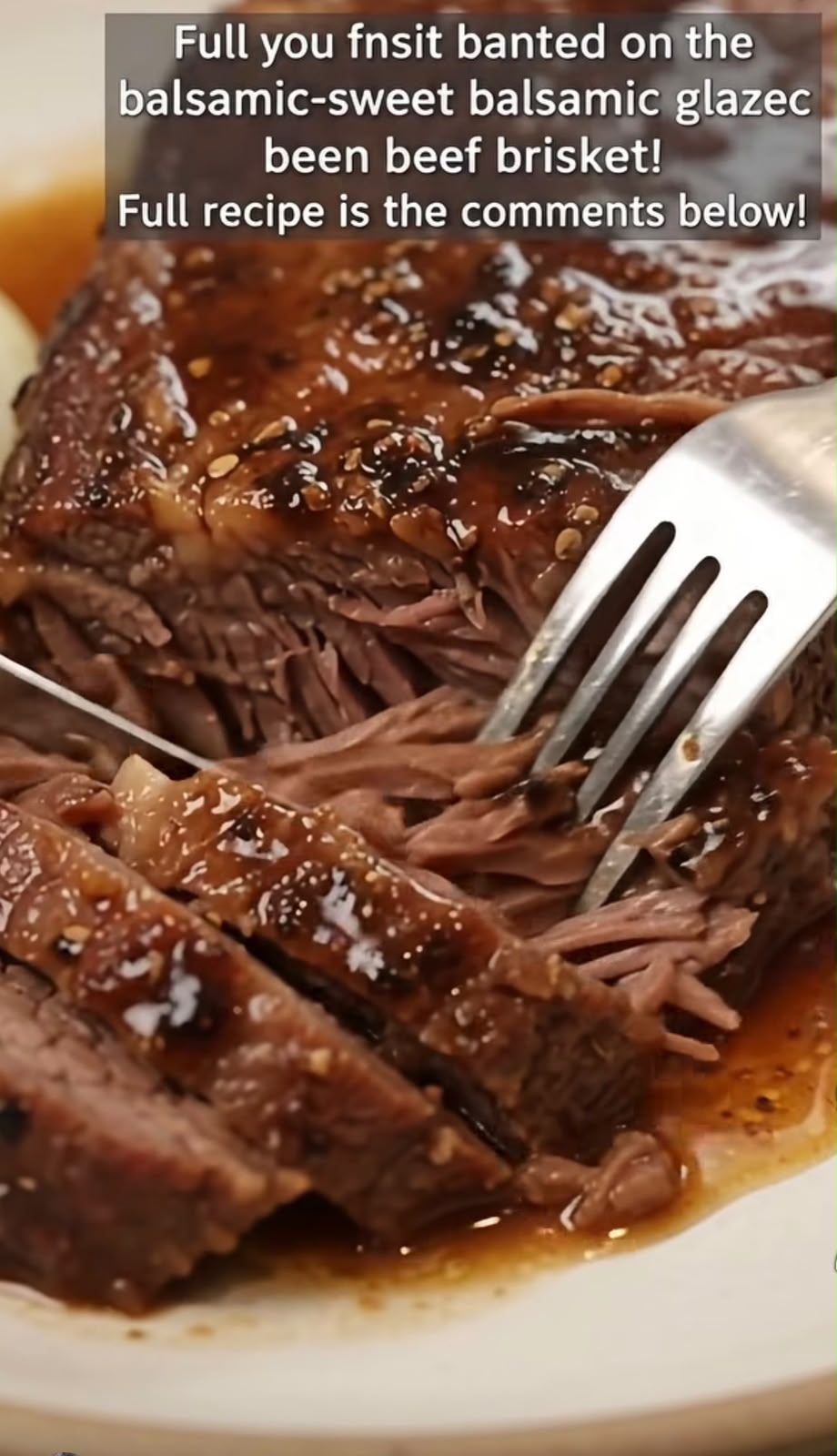
Slow Cooker Balsamic Glazed Beef Brisket – Tender, Juicy, and Full of Flavor
Introduction
If you love hearty, comforting meals that practically cook themselves, this Slow Cooker Balsamic Glazed Beef Brisket is a recipe you need to add to your dinner rotation. Made with tender beef brisket, rich balsamic vinegar, savory beef broth, garlic, and a touch of brown sugar, this slow-cooked dish delivers a beautiful balance of sweet, tangy, and savory flavors.
The slow cooker does most of the work, allowing the beef to become incredibly tender while soaking up the delicious balsamic glaze. As the brisket cooks slowly, the sauce develops a deep, rich flavor that makes every slice irresistible.
This recipe is perfect for Sunday family dinners, holiday gatherings, special occasions, or busy weeknights when you want a satisfying homemade meal without spending hours in the kitchen. Serve it with creamy mashed potatoes, roasted vegetables, rice, or warm dinner rolls to complete the meal.
Best of all, the ingredients are simple and easy to find at most grocery stores. With just a few minutes of preparation, you can let your slow cooker transform an affordable cut of beef into a restaurant-worthy dinner.
Why You’ll Love This Slow Cooker Balsamic Glazed Beef Brisket
- Incredibly tender beef: Slow cooking helps break down the connective tissue in brisket, creating a tender texture.
- Sweet and tangy glaze: Balsamic vinegar, brown sugar, and Worcestershire sauce create a rich, balanced flavor.
- Easy preparation: Most of the work involves seasoning the beef and mixing the sauce.
- Perfect for entertaining: This generous main dish is ideal for family meals and gatherings.
- Wonderful leftovers: The brisket tastes delicious the next day as the flavors continue to develop.
- Versatile serving options: Enjoy it with potatoes, vegetables, rice, or sandwiches.
Preparation and Cooking Information
- Preparation time: 15 minutes
- Cooking time: 8–10 hours on LOW or 4–6 hours on HIGH
- Total time: Approximately 8 hours 15 minutes to 10 hours 15 minutes on LOW
- Servings: 6–8
- Cooking method: Slow cooker
- Cuisine: American-inspired comfort food
- Main ingredient: Beef brisket
Cooking times vary depending on the thickness of the brisket, your slow cooker, and the size of the cut.
Ingredients for Slow Cooker Balsamic Glazed Beef Brisket
For the Beef
- 3–4 pounds beef brisket, preferably flat-cut or point-cut
- 1 tablespoon olive oil, for searing
- 1 teaspoon salt, or to taste
- 1 teaspoon freshly ground black pepper
- 1 teaspoon smoked paprika
- 1 teaspoon onion powder
- 1 teaspoon garlic powder
For the Balsamic Glaze
- 1/2 cup balsamic vinegar
- 1/2 cup beef broth
- 1/4 cup packed brown sugar
- 1/4 cup ketchup
- 2 tablespoons Worcestershire sauce
- 2 tablespoons soy sauce
- 4 cloves garlic, minced
- 1 medium yellow onion, thinly sliced
- 1 tablespoon Dijon mustard
- 1 teaspoon dried thyme
- 1 tablespoon cornstarch, optional, for thickening
- 2 tablespoons cold water, optional, for mixing with the cornstarch
Optional Garnishes
- 2 tablespoons chopped fresh parsley
- A few sprigs of fresh thyme
- Freshly cracked black pepper
Ingredient note: The balsamic vinegar provides the characteristic tangy flavor, while brown sugar softens its sharpness. Beef broth adds savory depth, and Worcestershire sauce brings extra richness. If your balsamic vinegar is particularly sweet, start with a little less brown sugar and adjust the sauce to taste.
Instructions: How to Make Slow Cooker Balsamic Glazed Beef Brisket
Step 1: Prepare the Brisket
Remove the brisket from its packaging and pat it dry with paper towels. Drying the surface helps the seasonings adhere and allows the beef to develop a better crust if you choose to sear it.
In a small bowl, combine the salt, black pepper, smoked paprika, onion powder, and garlic powder.
Rub the seasoning mixture evenly over both sides of the brisket. Make sure the thicker portions and edges are seasoned as well.
If possible, allow the seasoned beef to rest at room temperature for about 15–20 minutes while you prepare the remaining ingredients. Do not leave raw beef unrefrigerated for more than two hours.
Step 2: Sear the Beef for Extra Flavor
Heat the olive oil in a large skillet over medium-high heat.
Carefully place the brisket in the hot skillet and sear it for approximately 3–5 minutes per side, until a deep brown crust develops.
Searing is optional, but it adds a wonderful roasted flavor and creates a more complex final dish.
If the brisket is too large for your skillet, cut it into two pieces so it fits comfortably. Transfer the browned beef to a plate while you prepare the sauce.
Step 3: Prepare the Balsamic Glaze
In a medium bowl, whisk together the balsamic vinegar, beef broth, brown sugar, ketchup, Worcestershire sauce, soy sauce, minced garlic, Dijon mustard, and dried thyme.
Continue whisking until the brown sugar is mostly dissolved and the ingredients are well combined.
Taste a small amount of the uncooked sauce and adjust the balance if desired. Add a little more brown sugar for sweetness or a splash of beef broth if you prefer a milder vinegar flavor.
Remember that the sauce will concentrate as it cooks, so it should taste slightly more pronounced before cooking than you want the final glaze to taste.
Step 4: Layer the Ingredients in the Slow Cooker
Spread the sliced onion across the bottom of the slow cooker.
Place the seasoned brisket on top of the onions, with the fattier side facing upward when practical.
Pour the balsamic mixture over the beef, making sure the sauce reaches the bottom of the cooker. The brisket does not need to be completely submerged because the slow cooker traps moisture and the beef will release additional juices as it cooks.
Cover with the lid.
Step 5: Slow Cook Until Tender
Cook on LOW for 8–10 hours or on HIGH for approximately 4–6 hours.
LOW is generally the preferred setting because it gives the connective tissue plenty of time to soften without rushing the cooking process.
Avoid lifting the lid repeatedly. Each time you open the slow cooker, heat escapes and the cooking time may increase.
The brisket is ready when it is fork-tender and a fork slides into the thickest part with little resistance. For a brisket that slices neatly, you may want it tender but still able to hold its shape.
For food safety, cook beef to at least 145°F (63°C) with a three-minute rest as a baseline, but brisket generally requires substantially more cooking to become tender. Use a food thermometer and check tenderness rather than relying on time alone.
Step 6: Rest and Slice the Brisket
Carefully remove the cooked brisket from the slow cooker and transfer it to a cutting board.
Allow it to rest for approximately 10–15 minutes before slicing. This helps the meat retain more of its juices.
Identify the direction of the muscle fibers and slice the brisket thinly against the grain. Cutting against the grain shortens the muscle fibers and makes each bite easier to chew.
If the brisket is exceptionally tender and begins to fall apart, use two forks to pull it into large pieces instead.
Step 7: Make the Balsamic Sauce Thicker
For a naturally rich sauce, transfer the cooking liquid and softened onions to a saucepan.
Skim excess fat from the surface if necessary. Bring the liquid to a gentle simmer and cook for approximately 5–10 minutes, stirring occasionally, until it reduces slightly.
For a thicker glaze, mix 1 tablespoon of cornstarch with 2 tablespoons of cold water in a small bowl. Whisk this slurry into the simmering sauce gradually.
Cook for another 1–2 minutes, stirring until the sauce thickens. Add a little extra broth if it becomes too thick.
Taste the finished sauce and adjust the seasoning if needed.
Step 8: Glaze and Serve
Arrange the sliced brisket on a serving platter.
Spoon the warm balsamic glaze generously over the beef, making sure each slice receives some of the sauce and softened onions.
Garnish with chopped fresh parsley or thyme if desired.
Serve immediately with your favorite side dishes and extra sauce on the table.
Cooking Methods and Helpful Techniques
Slow Cooker Method
The slow cooker is ideal for this recipe because it maintains a moist cooking environment and gives the brisket plenty of time to become tender.
Use a cooker large enough to accommodate the brisket without forcing the lid open. A 6-quart slow cooker generally works well for a 3–4-pound brisket, although the shape of the cut matters.
Optional Oven Method
If you do not have a slow cooker, you can prepare the recipe in a covered Dutch oven.
Preheat the oven to 300°F (150°C). Sear the seasoned brisket in the Dutch oven, add the onions and balsamic sauce, and cover tightly.
Cook for approximately 3–4 hours, checking periodically until the beef is fork-tender. The exact time depends on the size and thickness of the brisket.
Keep the cooking vessel covered to prevent excessive moisture loss, and add a little extra beef broth if the liquid becomes too low.
Choosing the Right Cut of Beef
Brisket comes from the lower chest of the cow and contains connective tissue that benefits from slow, moist cooking.
The flat cut is leaner and generally produces neater slices. The point cut contains more fat and often creates a richer result.
Both cuts work well in this recipe. Choose a cut that fits your slow cooker comfortably.
Tips for the Best Balsamic Glazed Beef Brisket
Do not skip seasoning. Salt, pepper, garlic powder, and smoked paprika create a flavorful foundation that complements the glaze.
Sear when time allows. Browning the brisket adds extra depth, although the recipe will still work without this step.
Balance the acidity. Balsamic vinegar can vary in sweetness and intensity. Adjust the brown sugar gradually instead of adding too much at once.
Keep the lid closed. Maintaining a consistent temperature helps the beef cook evenly.
Check tenderness before serving. A brisket that is still tough usually needs additional cooking time, even if it has reached a safe internal temperature.
Slice against the grain. This is one of the most important techniques for serving tender brisket.
Let the sauce rest briefly. Skimming excess fat and reducing the cooking liquid gives you a cleaner, richer glaze.
Make it ahead. Brisket can be cooked a day in advance and gently reheated in its sauce.
What to Serve with Balsamic Glazed Beef Brisket
This slow cooker brisket pairs beautifully with a variety of comforting side dishes.
Creamy Mashed Potatoes
Mashed potatoes are a classic pairing because they absorb the rich balsamic sauce. Add butter, warm milk, salt, and black pepper for a smooth, creamy texture.
Roasted Vegetables
Roasted carrots, Brussels sprouts, green beans, or broccoli add color and balance the richness of the beef.
Steamed Rice
White or brown rice provides a simple base that soaks up the sweet and tangy glaze.
Garlic Butter Green Beans
Fresh green beans tossed with garlic and butter offer a bright, savory contrast to the tender brisket.
Buttered Egg Noodles
Egg noodles make the meal especially comforting. Toss them with a little butter and parsley before serving.
Dinner Rolls
Soft dinner rolls are perfect for soaking up any remaining sauce.
Fresh Green Salad
A crisp salad with leafy greens, cucumber, tomatoes, and a light vinaigrette provides a refreshing contrast to the slow-cooked beef.
Delicious Variations
Honey Balsamic Beef Brisket
Replace half of the brown sugar with 2 tablespoons of honey for a slightly floral sweetness. Taste the sauce before adding more sweetener.
Garlic and Herb Brisket
Increase the garlic to 6 cloves and add 1 teaspoon of dried rosemary along with the thyme for a more herb-forward flavor.
Mushroom Balsamic Brisket
Add 8 ounces of sliced mushrooms to the slow cooker with the onions. They absorb the savory juices and contribute an earthy flavor.
Spicy Balsamic Brisket
Add 1/4 teaspoon of crushed red pepper flakes to the sauce for gentle heat. Increase the amount if you prefer a spicier dish.
Low-Sugar Version
Reduce or omit the brown sugar and use a balsamic vinegar without added sweeteners. The final sauce will be more tangy and less sweet, so taste and adjust carefully.
Shredded Balsamic Beef Sandwiches
After cooking, shred the tender beef with two forks and mix it with enough glaze to coat the meat. Serve on sandwich rolls with sliced provolone, caramelized onions, or crunchy slaw.
The History Behind Slow-Cooked Beef Brisket
Brisket has a long history as a practical and flavorful cut of beef. Because it comes from a hardworking muscle, it is naturally firmer than some premium steaks and benefits from slow cooking, braising, or smoking.
Across different culinary traditions, cooks have developed ways to turn brisket into a tender, satisfying meal. Jewish cuisine is known for braised brisket served during holidays and family gatherings, while Texas barbecue has made smoked beef brisket an iconic dish.
Slow cookers brought another convenient method into home kitchens. By maintaining a low, steady cooking temperature, these appliances made it easier for families to prepare flavorful beef without constant attention.
Balsamic vinegar originated in Italy, particularly in the regions associated with traditional balsamic production. Its complex sweet-and-sour flavor makes it a useful ingredient in marinades, reductions, dressings, and meat sauces.
Combining balsamic vinegar with American-style slow-cooked brisket is a modern home-cooking approach rather than a traditional historical brisket preparation. The result brings together the comforting character of slow-cooked beef and the distinctive tang of balsamic glaze.
Nutrition Information
The following values are estimates for one serving, assuming the recipe serves eight people and includes a portion of brisket and sauce. Actual nutrition depends on the cut of beef, the amount of visible fat, the ingredients used, and how much sauce is consumed.
- Calories: approximately 400–550
- Protein: approximately 35–45 grams
- Carbohydrates: approximately 8–15 grams
- Fat: approximately 20–35 grams
- Sugar: approximately 5–10 grams
- Sodium: approximately 500–900 milligrams
These estimates are not laboratory-tested nutrition facts. For a more accurate calculation, use the nutrition information for your specific ingredients and serving sizes.
Storage and Reheating Instructions
How to Store Leftovers
Allow the brisket to cool slightly, then place it in shallow, airtight containers with some of the cooking sauce.
Refrigerate within two hours of cooking. Properly refrigerated leftovers should generally be eaten within 3–4 days.
Keeping the meat in its sauce helps prevent it from drying out.
How to Freeze Balsamic Beef Brisket
For longer storage, divide the cooked brisket into meal-sized portions and add some sauce to each freezer-safe container.
Seal well, label with the date, and freeze for the best quality for approximately 2–3 months.
Thaw frozen brisket in the refrigerator before reheating.
How to Reheat
For the best results, place the brisket and sauce in a covered baking dish and warm in a 300°F (150°C) oven until heated through.
You can also reheat individual portions in a covered skillet over low heat. Add a splash of beef broth if the sauce has become too thick.
A microwave works for individual servings as well. Cover loosely, heat in short intervals, and stir or turn the meat as needed.
Reheat leftovers to an internal temperature of 165°F (74°C).
Frequently Asked Questions
Can I put raw brisket directly into the slow cooker?
Yes. Searing is optional, so you can place seasoned raw brisket directly over the onions and pour the sauce over it. Searing adds flavor but is not essential.
Can I cook this recipe on HIGH?
Yes. Cook on HIGH for approximately 4–6 hours, depending on the brisket’s size and thickness. LOW is generally preferred for the most consistent tenderness.
Why is my brisket still tough?
Brisket often becomes tender only after its connective tissue has had enough time to soften. If it is tough, continue cooking and check it again after 30–60 minutes. Avoid assuming that reaching a particular temperature means it is ready to slice.
Should the brisket be completely covered in liquid?
No. The slow cooker retains moisture, and the beef releases juices during cooking. The sauce should coat the meat and collect around the bottom rather than completely cover it.
Can I prepare the sauce the night before?
Absolutely. Mix the sauce ingredients and refrigerate them in a covered container. You can also slice the onion in advance. Keep the raw brisket refrigerated until you are ready to cook.
For food safety, do not place a large quantity of hot ingredients into a slow cooker and leave it sitting unheated for an extended period.
Can I use another cut of beef?
Chuck roast can work as an alternative, although the texture and slicing characteristics will differ. It is often better suited to shredding than brisket. Cooking time will depend on the cut and thickness.
Can I make the sauce less sweet?
Yes. Reduce the brown sugar to 1–2 tablespoons and taste the sauce after cooking. The balsamic flavor will be more pronounced.
Can I make the brisket ahead for a party?
Yes. Cook it until tender, cool and refrigerate it with the sauce, then slice it when convenient. Reheat gently in the sauce until it reaches 165°F (74°C). This approach is particularly helpful when preparing a holiday or family dinner.
Is this recipe gluten-free?
Not automatically. Standard soy sauce and Worcestershire sauce may contain gluten or ingredients that require checking. Choose certified gluten-free alternatives and verify the labels on all packaged ingredients.
Conclusion
Slow Cooker Balsamic Glazed Beef Brisket is a comforting, flavorful meal that transforms a traditional cut of beef into something special. The slow cooking process creates tender meat, while balsamic vinegar, brown sugar, garlic, and savory seasonings produce a rich glaze that complements every slice.
Whether you serve it for Sunday dinner, a holiday celebration, or an ordinary weeknight meal, this recipe delivers satisfying flavor without requiring constant attention in the kitchen.
Pair it with mashed potatoes, roasted vegetables, buttered noodles, or fresh dinner rolls for a complete meal. Save any leftovers with the sauce for delicious sandwiches or another easy dinner later in the week.
Once you try this sweet, tangy, and savory brisket, it may become one of your favorite slow cooker recipes.
For the Lovers of Comfort Food
If you enjoy tender slow-cooked beef, rich homemade sauces, and easy family dinners, this balsamic glazed brisket is a wonderful recipe to keep in your collection. It brings together simple ingredients, dependable cooking techniques, and the kind of comforting flavor that makes everyone look forward to dinner.
Serve it warm, spoon over plenty of balsamic glaze, and enjoy every delicious bite with the people you love.